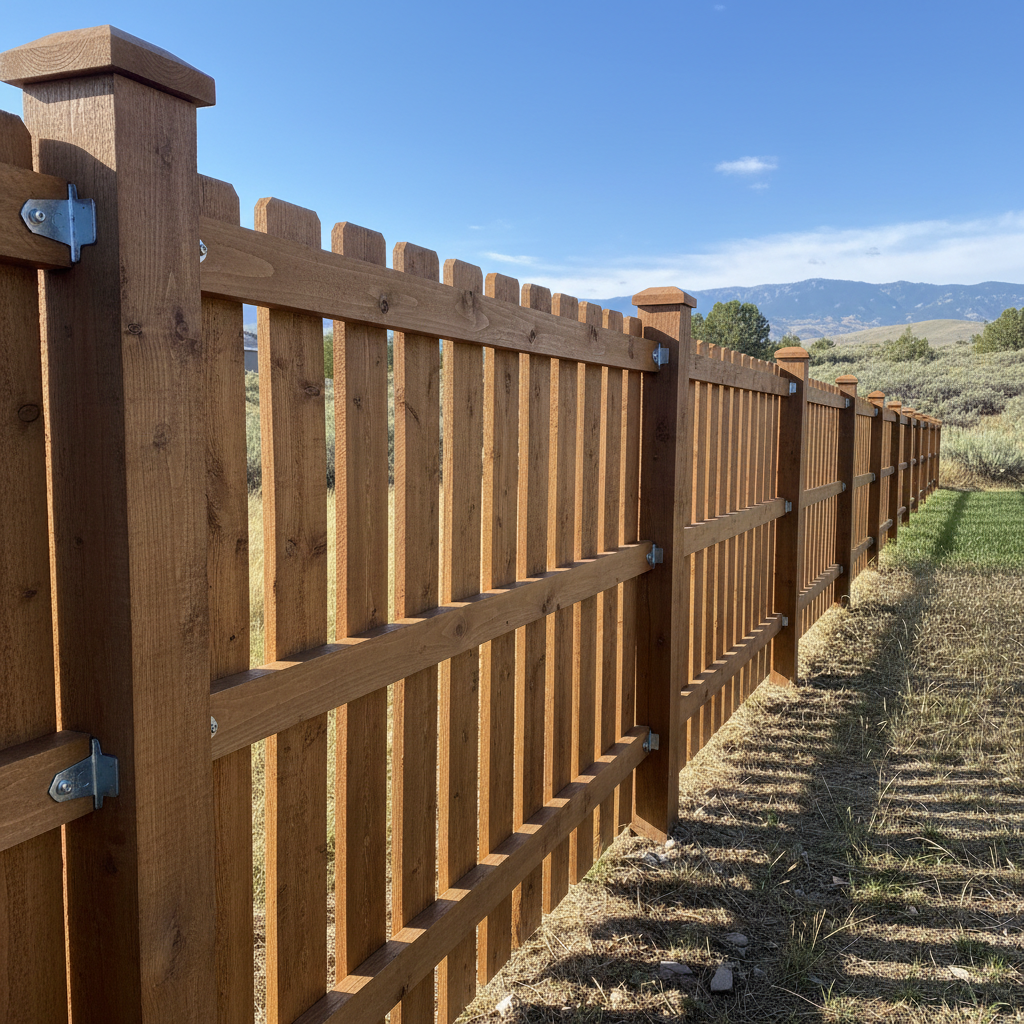
Got land in Ogden and thinking about a farm fence? Good. It's a smart move, whether you're keeping animals in, critters out, or just defining your property lines. I get a lot of questions about this stuff, so I figured I'd lay out some straight answers for you.
What's the best type of farm fence for horses?
For horses, you've really gotta prioritize safety and visibility. Barbed wire is an absolute no-go. Seriously, it's a disaster waiting to happen for a horse. What I recommend most often is a sturdy, well-installed woven wire fence with a top rail, or even better, a combination of high-tensile smooth wire with electric strands. The woven wire keeps them from stepping through, and that top rail — usually wood or a heavy-duty polymer — gives them a visual barrier and stops them from leaning on the fence. You could also go with a three or four-rail wood fence, but that's a bigger investment, both in materials and ongoing maintenance. The key is making sure whatever you choose is visible enough that a horse won't run into it at speed.
How do I keep deer out of my garden or orchard with a farm fence?
Deer are a pain, aren't they? Especially around the foothills of Ogden, where they're always looking for an easy meal. For deer, height is your main weapon. A standard 4-foot fence isn't going to cut it; they'll clear that without breaking a sweat. You're looking at a minimum of 7-8 feet tall, often even 10 feet if you've got particularly determined deer or a high deer population. Woven wire or a high-tensile mesh fence works well for this. Make sure the mesh is tight enough at the bottom so fawns can't squeeze through. Some folks even angle the top section outwards to make jumping harder. It's an investment, sure, but it's usually cheaper than losing your entire crop year after year.
Can I use electric fencing for all types of livestock?
Yep, you absolutely can, but you need to tailor it to the animal. Electric fencing is incredibly versatile. For cattle, a few strands of high-tensile wire with a good charger will do the trick. For sheep and goats, you'll need more strands, closer together and lower to the ground, because they're smaller and more prone to crawling under. Pigs? They're smart and powerful, so you'll want a robust electric system, often with a hot wire close to the ground. The key is a strong enough charger and good grounding. I've seen folks try to skimp on the charger, and it just doesn't work. You need that consistent zap to teach the animals respect for the fence. It's a psychological barrier more than a physical one, really.
What kind of fence posts should I use for a long-lasting farm fence?
This is where a lot of people cut corners, and it always comes back to bite 'em. For farm fencing, you want treated wood posts or steel T-posts. For corner posts and gate posts, treated wood is almost always the way to go. They're stronger and provide better anchoring. We're talking 6-8 inch diameter posts, set deep. For line posts, T-posts are common because they're quick to install and pretty durable. But even with T-posts, you need to make sure they're driven in deep enough to handle the tension of the wire, especially when we get those heavy snowfalls or strong winds coming off the mountains here in Ogden. Don't cheap out on your posts; they're the backbone of your fence.
How do I handle uneven terrain or slopes when installing a farm fence?
Uneven terrain is a common challenge, especially on properties closer to the benches or in areas with natural drainage. You've got a couple of options. You can