Farm fencing isn't just about keeping animals in; it's an investment in your property, your livestock's safety, and your peace of mind. But let's be real, you're probably wondering, "How much is this actually going to cost me?" It's a fair question, and I'm here to give you some straight answers based on what I see here in Ogden.
What Drives the Price of Farm Fencing?
A lot of folks think a fence is a fence, but with farm setups, there's a huge range of materials and labor involved. Here's what really makes the price tag jump around:
- Material Choice: This is probably the biggest factor. Are we talking simple barbed wire, woven wire, high-tensile, or something more robust like pipe fencing? Each has its own cost per foot, and the durability and lifespan vary wildly.
- Fence Height & Number of Strands: A 4-strand barbed wire fence is cheaper than a 7-strand high-tensile setup. Taller fences with more lines naturally use more material and take longer to install.
- Terrain & Soil Conditions: This is a big one for us around Ogden. If your land is flat and the soil's easy to dig, like some of the old farmland out towards Plain City, installation goes quicker. But if we're dealing with rocky, uneven ground up closer to the foothills, or even just really dense clay, post-hole digging becomes a much bigger job. That means more labor hours.
- Gate Requirements: Every gate adds to the cost. Size, material (tube gate vs. custom-welded), and hardware (latches, hinges) all factor in. A 16-foot heavy-duty livestock gate can easily run you $300-$600 just for the gate itself, not including installation.
- Length of the Fence: This one's obvious, right? More linear feet means more material and more labor. However, sometimes longer runs can get you a slightly better per-foot price on materials from suppliers.
- Accessibility: Can we get our equipment right up to the fence line? If we're hauling materials and tools by hand across a long pasture, it's going to take longer.
Typical Cost Ranges for Farm Fencing in Ogden
Okay, let's talk numbers. These are general ranges for installed fences, meaning materials and labor. Remember, these can fluctuate with material prices, which have been a bit wild lately.
- Barbed Wire (3-5 strands): This is your most economical option, good for deterring cattle or marking boundaries. You're generally looking at $4.00 - $7.00 per linear foot.
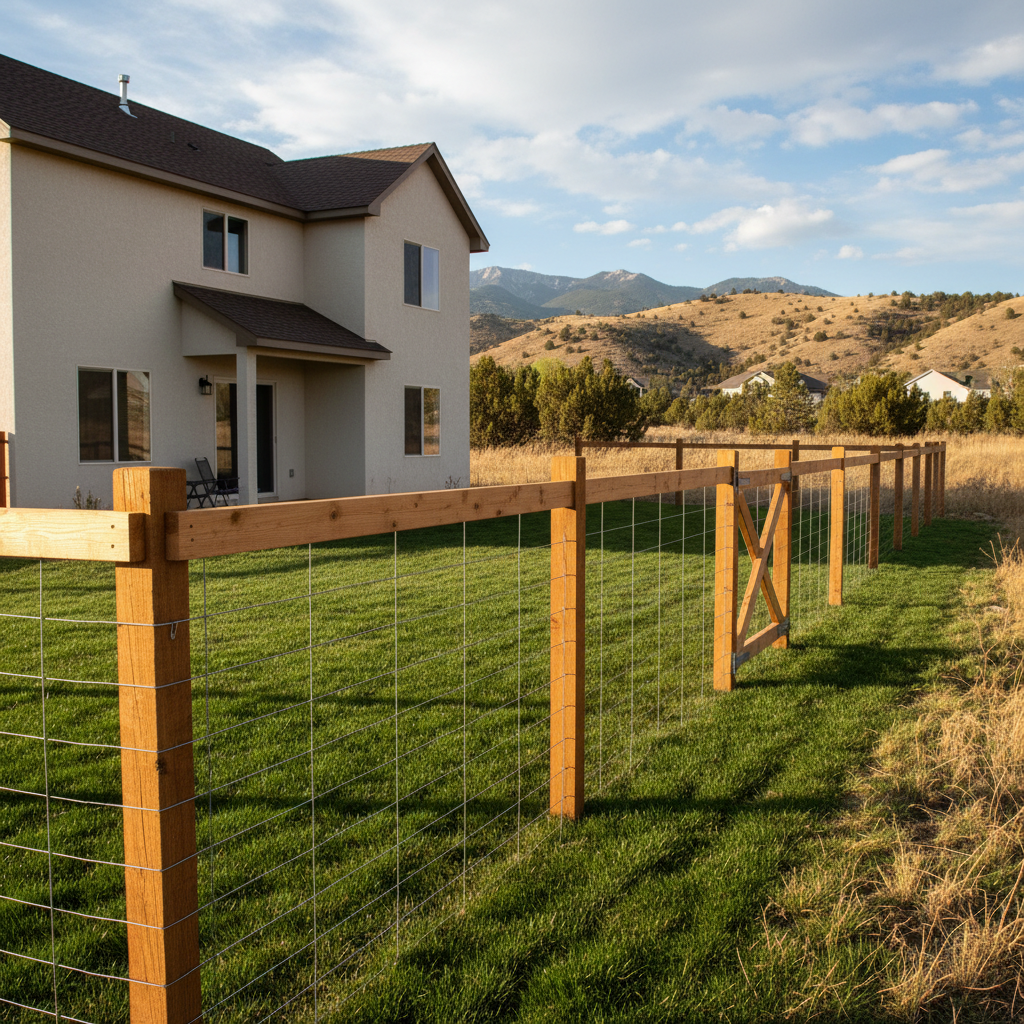
- Woven Wire (Field Fence): Great for keeping in smaller livestock like sheep, goats, or even larger dogs. It's more labor-intensive to stretch correctly. Expect to pay around $6.00 - $10.00 per linear foot.
- High-Tensile Wire (5-7 strands): A durable, low-maintenance option that can be electrified. It's strong and lasts a long time. This usually runs $7.00 - $12.00 per linear foot.
- Pipe Fencing (Continuous Weld or Panel): This is the Cadillac of farm fencing, incredibly strong and long-lasting, often used for corrals, arenas, or high-traffic areas. It's also the most expensive. Depending on the pipe gauge and number of rails, you're looking at $18.00 - $35.00+ per linear foot.
These prices include standard wooden or steel posts, installation, and basic hardware. If you want specialty posts or custom features, that'll add to it.
What Should Be in Your Farm Fencing Quote?
When you get a quote from me or any other reputable contractor, it shouldn't just be a single number. You need to see the breakdown. Here's what I always include:
- Detailed Material List: Specifics on the type of wire, posts (wood, steel, size, spacing), gates (size, type, hardware), and any other components like braces or insulators.
- Linear Footage: The exact length of fence being installed.
- Labor Costs: This might be broken down by man-hours or a flat rate for the project.
- Site Preparation: Any clearing, old fence removal, or grading that's included.
- Permits: If any local permits are required, who is responsible for obtaining them.
- Warranty: What kind of guarantee comes with the work.
- Total Cost: The final price, clearly stated.
Always make sure the quote specifies the type of posts and how deep they'll be set. You don't want someone skimping on post depth, especially with our windy springs here in Ogden.
How to Avoid Overpaying for Farm Fencing
Nobody wants to get ripped off, especially when you're investing in your livelihood. Here's my advice:
- Get Multiple Quotes: Don't just go with the first guy. Get at least three detailed quotes. This helps you compare apples to apples and understand the market rate.
- Ask for References: A good contractor will happily provide them. Call those references and ask about their experience, especially regarding quality and sticking to the budget.
- Don't Just Go for the Cheapest: The lowest bid often means corners are being cut – cheaper materials, less experienced labor, or a rushed job. A fence that fails in a year isn't a good deal.
- Understand the Scope: Make sure everyone is quoting on the exact same project. If one quote is significantly lower, find out why. Are they using cheaper materials? Less robust posts?
- Check for Licensing & Insurance: This is non-negotiable. If something goes wrong on your property, you want to know they're covered. Ogden Fencing Company is fully licensed and insured, and any reputable contractor should be too.
- Communicate Clearly: Be explicit about your needs. What kind of animals are you containing? What are your long-term goals for the fence? The more information you give, the more accurate the quote will be.
Putting in a new farm fence is a big project, but with the right information and a clear plan, you can get a durable, effective fence that fits your budget. Don't hesitate to ask questions; it's your money and your property we're talking about.